
What to Do About Property Encroachment
 You look out your window one morning and notice your neighbor putting up a shed, fence, or driveway right where you believe your property is. It is a frustrating situation, and it can quickly turn into a serious dispute if it is not handled carefully.
This is called property encroachment, and it happens more often than most people think. The good news is that most cases can be resolved without going to court. But you need to take the right steps, and you need to take them early.
What Is Property Encroachment?
Property encroachment happens when a neighbor builds a structure, installs landscaping, or extends something onto your land without your permission. Common examples include a fence that crosses the property line, a shed that sits partly on your side, a driveway that spills onto your lot, or tree roots and hedges that grow beyond the boundary.
Encroachment does not always happen on purpose. In many cases, a neighbor simply does not know exactly where the property line is. That is why your first step should be to confirm the boundary before you do anything else.
Step 1: Confirm the Property Line First
Before you approach your neighbor or take any action, make sure you are right about where the line actually is. Many disputes start because both sides are working from assumptions rather than facts.
Pull out your deed and any existing survey documents. Review the property description and any drawings that were recorded when you purchased the land.
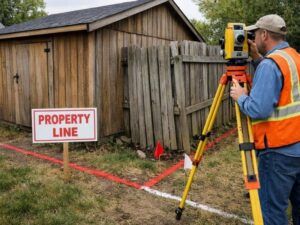
If you do not have a recent survey, or if the existing one does not clearly show where the issue is, hire a licensed land surveyor to measure and mark the boundary. This gives you documented, accurate evidence of where your property ends. It also protects you if the matter ever goes to a higher level.
Step 2: Document Everything
Once you have confirmed the encroachment, start keeping a record. Take clear photos and videos of the structure or improvement that is crossing onto your land. Note the date each photo was taken.
If your neighbor is still in the process of building, photograph the progress at different stages. If the structure is already finished, document its exact location in relation to your property line.
Keep copies of all correspondence between you and your neighbor, whether by text, email, or letter. Written records are far more useful than trying to recall a conversation later on.
Step 3: Talk to Your Neighbor Calmly
Once you have your facts in order, approach your neighbor directly. Keep the conversation calm and respectful. In many cases, they may not even realize they have crossed the line.
Bring your survey or deed to the conversation. Show them where the property line actually sits. Give them a chance to respond before assuming bad faith.
Many encroachment cases are resolved at this stage. A neighbor who made an honest mistake is often willing to correct it once the facts are clear. Keeping the relationship civil makes everything easier, especially since you will continue to live next to each other.
Step 4: Try Mediation if the Conversation Fails
If your neighbor is unwilling to talk or refuses to acknowledge the problem, mediation is a good next step before going to court.
A professional mediator is a neutral third party who helps both sides reach a fair agreement. Mediation is faster and far less expensive than a lawsuit. Many local courthouses, bar associations, and community organizations offer mediation services.
During mediation, both parties can explore practical solutions. These might include adjusting the location of the structure, entering into a formal easement agreement, or negotiating a payment for use of the portion of land.
Step 5: Understand Your Legal Options
If mediation does not work, you have several legal options available.
You can ask a court for an injunction, which is a legal order requiring your neighbor to remove the encroaching structure. This option is most common when the encroachment is significant and ongoing.
You can also pursue financial compensation, where your neighbor pays for the right to use that section of your land, or in some cases, buys the strip outright.
If neither party can reach a resolution on their own, a civil lawsuit may be the only path forward. At that point, having a licensed surveyor’s report, your photographs, and your written records will be essential to making your case.
Why You Should Not Wait
Ignoring an encroachment can have real legal consequences over time. In some states, if a neighbor openly uses a portion of your land for a long enough period without objection, they may gain legal rights to it through a concept called adverse possession.
Acting early protects your rights. Even a simple letter to your neighbor confirming the boundary and asking them to address the issue creates a record that you did not consent to the encroachment.
Frequently Asked Questions
What if the encroachment happened before I bought the property?
If a structure was already encroaching when you purchased the land, it should have been identified in a title search or survey at closing. Talk to a real estate attorney about your options. Depending on the situation, your title insurance may cover some costs related to the dispute.
Can I remove the encroaching structure myself?
This is strongly discouraged. Taking unilateral action can expose you to liability and make the situation worse. Always pursue a legal resolution rather than removing someone else’s property on your own.
Does a verbal agreement with my neighbor count?
Verbal agreements are very difficult to enforce. Any agreement you reach with your neighbor regarding the boundary or the structure should be put in writing, signed by both parties, and ideally recorded with your county’s land records office.
For a free land surveying quote, call us at (256) 770-8662 or send us a message by going here.
Posted in land surveying, land surveyor |